
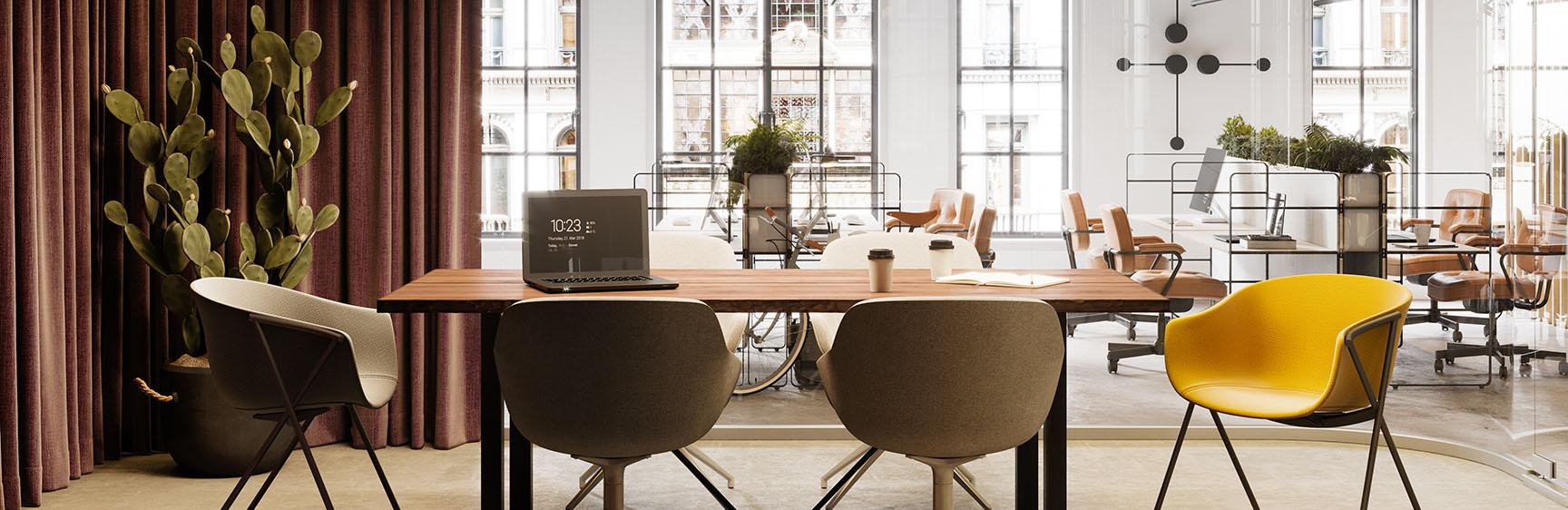
Selon plusieurs études, le bruit reste une des premières causes de dérangement au travail. Garantissant le confort des salariés, sa maîtrise améliore leur concentration et leur efficacité. De l’aménagement à l’accessoirisation, les solutions sont multiples et complémentaires.
Les chiffres le confirment : 59% des actifs se disent gênés par le bruit sur leur lieu de travail selon une enquête JNA-Ifop menée en octobre 2019. Le constat dépasse l’industrie ou le BTP. Un sondage IPSOS réalisé pour AXA en 2019 auprès des fonctionnaires de l’enseignement et de la culture révèle que 62% disent évoluer dans un environnement professionnel difficile, notamment à cause du bruit.
Un coût économique et social
Conséquences ? L’enquête JNA-Ifop évoquée plus haut met en avant la perte de productivité (51%), les incompréhensions (47%) ou l’agressivité (42%) ressenties par les salariés se plaignant du bruit. La perte de temps de travail effectif s’élèverait jusqu’à 31 min par jour.
Dans l’idéal, le bruit dans les bureaux ou en open space doit se situer entre 35 dB et 55 dB maximum (cf. normes AFNOR NF X35-102 et NF S31-199), le seuil dit “de douleur” étant de 80dB. On estime qu’une conversation de travail atteint en moyenne 60 dB. Le son d’une photocopieuse ou d’une machine à café peut pour leur part atteindre 85 dB.
Bien concevoir ou (ré)aménager les locaux
Limiter les nuisances sonores passe d’abord par leur identification, en analysant les activités de l’entreprise, leur répartition in situ, la qualité acoustique de ces derniers. Il est ensuite possible de répartir les équipes par type d’activité, selon le niveau sonore généré.
Il est parfois intéressant de repenser l’aménagement des locaux, avec si nécessaire l’aide d’un architecte d’intérieur, afin de :
- créer des zones de travail bien distinctes ;
- implanter des spécifiques pour les usages réclamant une forte concentration (“phone box”, mini-salle de réunion externalisée…) ;
- cloisonner les machines et équipements les plus bruyants (imprimantes, photocopieuses) avec des coffrages, des tôles, etc.
Insonoriser les pièces efficacement
Par pièce ou espace, l’insonorisation peut se faire sur toutes les dimensions. La pose d’une moquette réduit de 20 à 40 dB les bruits provenant du sol. Si elle est incompatible avec l’activité de l’entreprise, un revêtement en PVC ou des lattes l’aggloméré laminé se révèlent une alternative moins efficace, mais conseillée.
Des plaques et panneaux isophoniques peuvent être appliqués sur les murs et les plafonds. Le choix en la matière est vaste, avec plusieurs choix de couleurs et de design qui ne nuisent ni à la décoration ni à la convivialité des lieux. Il existe aussi des cloisons mobiles, autoportantes, parfaitement adaptées aux grands open spaces.
Les surfaces vitrées ne doivent pas être oubliées : double-vitrage de rigueur, châssis fixes ou étanchéité soignée des systèmes de fermeture. Privilégiez aussi des volets roulants aux battants ajourés.
Du mobilier et des accessoires à ne pas négliger !
L’aménagement intérieur joue aussi son rôle dans l’atténuation du bruit. Des marques spécialisées développent des gammes complètes de mobilier “anti-bruit”. Outre des fauteuils et canapés à mousse absorbante, il existe désormais des bureaux enveloppants, des espaces privatifs (de 1 à 4 places), des rangements acoustiques et des totems absorbants.
Au design soigné, ces éléments sont souvent proposés dans une large gamme de couleurs ; certains sont personnalisables avec impression de logo ou d’image. Leur capacité d’absorption acoustique répond aux normes ISO 354 et 16487.
Sur son poste de travail, tout un chacun peut enfin bénéficier d’écouteurs individuels ou d’un casque audio, solution simple et efficace en cas d’appels téléphoniques, visioconférences, etc.