
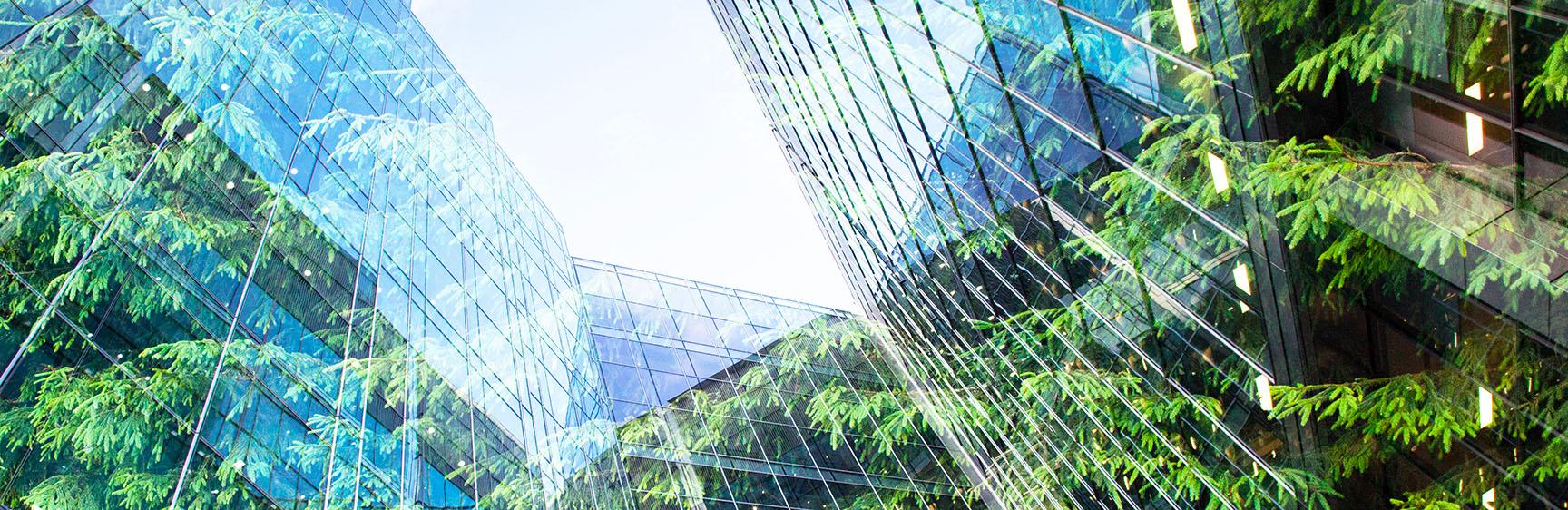
Les enjeux environnementaux et la prise de conscience collective en faveur de la transition énergétique ont fait émerger les concepts “d’espace de travail responsable” ou de “bureau durable ». Les principes ? Minimiser leur impact sur l’environnement, améliorer la vie de ceux qui y évoluent. En phase avec les politiques RSE des entreprises, ces démarches peuvent déboucher sur l’obtention d’un label.
Les espaces de travail présentent souvent des caractéristiques qui nuisent à l’environnement et au bien-être de leurs occupants. Exemples ? Un éclairage ou un chauffage coûteux, un bruit de fond agressif, un air vicié, ou encore des peintures aux effets toxiques.
Des solutions existent pour les rendre plus durables, sains, “verts”. Ce réaménagement s’inscrit ainsi dans le bilan social de la politique RSE de l’entreprise.
Les grands principes du bureau durable dans l’aménagement des espaces
L’écoconception d’un bureau consiste à y maximiser les ressources renouvelables. Matériaux sélectionnés selon leur traçabilité et leur durabilité (du bois par exemple), peintures et isolants écologiques, gestion rationnelle de l’eau et de l’électricité (produite, pourquoi pas, par panneaux solaires), tri-recyclage systématique des déchets…
Ces choix se doublent d’un agencement qui prévoit, selon la surface, des open-spaces ou des flex-offices, une salle de réunion dédiée et, dans l’idéal, une cabine acoustique et une zone de loisirs “familiale”.
Les plus audacieux s’orientent vers le design biophilique (intégration de végétaux in situ) ou le potager participatif (sur le toit, souvent). Le recours à un architecte d’intérieur expert en empreinte environnementale est indispensable si une certification des lieux est visée.
Quels labels envisager pour faire valoir vos engagements ?
Ainsi conçu, un espace de travail peut a minima afficher les certificats de ses meubles et matériaux : ISO 9001 (qualité de fabrication), ISO 14006 (écoconception), ISO 14001 (production propre).
Pour être labellisé, il doit s’inscrire dans une démarche de certification de type HPE (Haute Performance Énergétique), BBC (Bâtiment Basse Consommation, décernée par Effinergie) ou HQE (Haute Qualité Environnementale, de l’AFNOR).
- Exigeants, ces labels prônent le zéro C02 et la transformation des locaux en bâtiments à :
“énergie passive” (optimisation des apports naturels comme le soleil) ; - “énergie positive” (production d’énergie in situ, le surplus étant stocké ou revendu).
D’autres certifications sont envisageables et porteuses, notamment, pour les entreprises ouvertes à l’international, les labels anglo-saxons BREEAM(1) ou LEED(2).
Des bénéfices mesurables pour votre entreprise, et dans vos espaces
Gains de ces démarches ? Elles se traduisent par une réduction de la facture énergétique allant du sensible au considérable. Les économies se retrouvent aussi dans le poste achats, avec une augmentation de la durée de vie des produits ou une limitation de l’usage du papier.
Un cadre de travail éco-conçu est aussi plus confortable, mieux isolé. Les pollutions sonores y tendent vers le seuil de 55 dB prôné par l’OMS(3). L’irritabilité, le stress, la fatigue y diminuent. Avec souvent à la clé une concentration, une créativité, une productivité des travailleurs accrues.
(1) Building Research Establishment Environmental Assessment Method
(2) Leadership in Energy and Environmental Design
(3) Organisation mondiale de la santé