
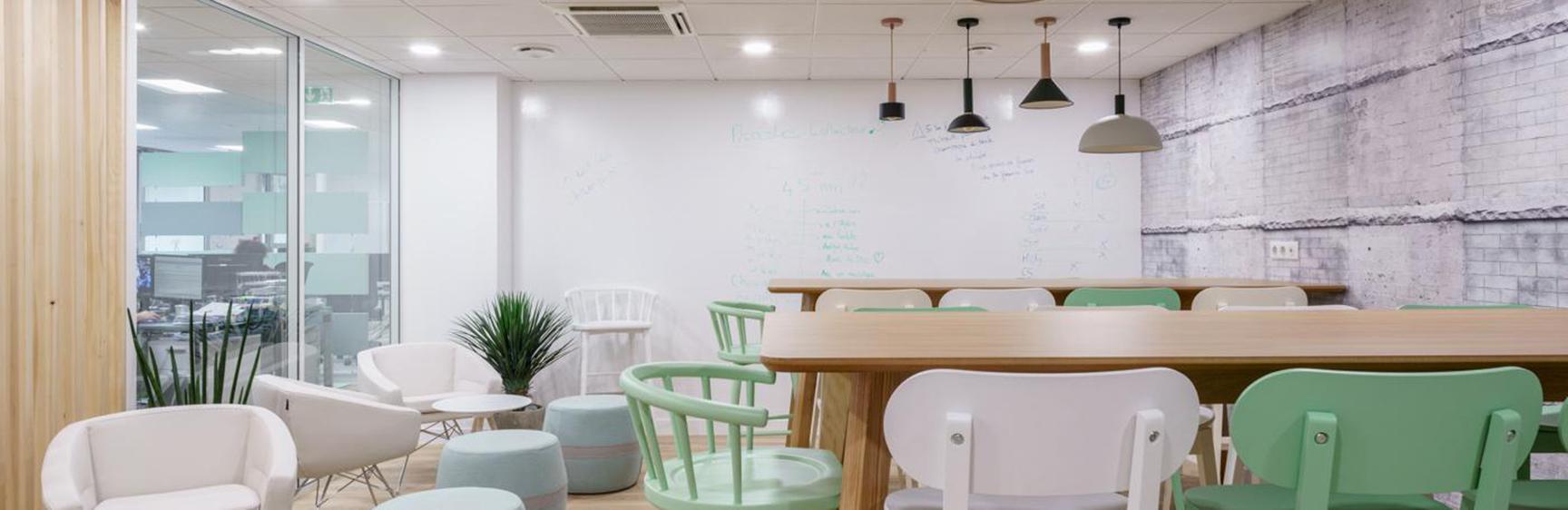
As the pressures of modern life continue to intensify, so does the need to preserve everyone's balance, sanity and well-being. We all need places where we can recharge our batteries and escape for a little while. Even the most motivated and hard-working people need regular breaks to stay positive and energized. This not only helps employees to be more productive, but also makes them happier in the long term. In this article, we'll explore the importance ofproviding relaxation areas in the workplace, and see how these can be optimized through space planning.
The importance of designing relaxation areas
In the office, we sometimes tend to underestimate the role of rest areas. And yet, they're essential, as they enable employees to find time for themselves, so as to remain productive and fulfilled. So, when designing rooms dedicated to relaxation, don't forget the importance of space planning. The layout of your relaxation room must take into account the needs of its users. To ensure that it is both successful and functional, take the time to ask yourself the right questions. Ask your employees what they would like to find in this new room, and see if there's anything you can do to improve their working environment. To do this, you may want to use a questionnaire to find out what your employees are looking for.
The question ofspace layout must be central to this project. By doing so, you'll ensure that the future room matches your company's needs and image. Would you like some food for thought before taking the plunge? Here are 5 key points to consider when designing a relaxation area that is sure to enhance your team's well-being.
Suppressing noise
The first factor to consider when creating a resting space is noise. Think about how often you need to take a break, and how stressful your environment is, before choosing a room. Is there a risk of being interrupted or disturbed? If so, it's best to select a place where there's less noise and traffic. This could be as simple as moving to another floor of the building, or finding a private office where there isn't much foot traffic. Removing noise is one way of creating a more serene space, one that will allow you to relax and think more clearly. To achieve this, you can choose to set up your break room in a closed room, or use partitions in the case of a smaller overall space.
Create a meeting place to encourage staff exchanges
As our working lives become more demanding, it's important to design a space where employees can chat, exchange ideas and socialize. When designing breakout spaces,adding a meeting place will help your team members bond with each other when they're not working. It's also a great way to ensure that conversations remain professional even when the office is quiet. The goal is to create an environment where employees can take care of themselves without taking time away from work.
Ensure that each space remains dedicated to a specific use
It may seem daunting at first, but it's important to ensure that each space is designed to meet a specific need. Indeed, we often tend to confuse the space dedicated to eating with the resting area, because in the absence of the latter, it's naturally inside the kitchen that we come to take refuge and relax. However, it's not always easy to relax alongside people who are eating or chatting over a cup of coffee. If the size of your premises allows it, it's best to separate the different areas within the company, while making sure that their use is clear to everyone. It may also be useful to provide information on the type of activities permitted in each room, so that employees know what is appropriate and what is not.
Add games and animations
Play is a great way to boost team morale and build relationships. It's also a great way to help employees relieve stress and foster creativity. In the process of designing relaxation areas, it's important to go beyond the typical break room and add team-building games and entertainment. These can include board games, yoga videos, meditation sessions or even fitness challenges. By offering these interactive elements, you'll help your employees stay active and motivated.
Decorate and personalize the relaxation area with your employees
One of the key points when designing a break room is to make it personal. By asking your employees to participate in the decoration and ambience of the space, you'll give them a sense of ownership and responsibility. For example, you can give them the opportunity to bring in photos, install plants or wall decorations, or suggest that they choose the location of each piece of furniture and object. This will encourage them to take more ownership of the space, and help them feel more at ease when they're there.
The workplace can be a stressful place. It's essential to maintain a healthy work-life balance, and to help your team feel good in the workplace. Your offices should be designed with this in mind, creating places that promote relaxation, well-being and collaboration. Whether your company has a single location or multiple sites, the design of relaxation areas can make the difference between success and failure. However, it's important to think carefully beforehand, taking into account the habits of workers and the constraints of the premises. Planning such a space can be a tricky business. So don't hesitate to seek professional advice, or hire a space planner to create it for you from A to Z.